
[ROLLING ANALYSIS] Trade/Tariff update
SourceNewsquawk
SectionMarket Analysis
THE LATEST
BROADER TARIFFS
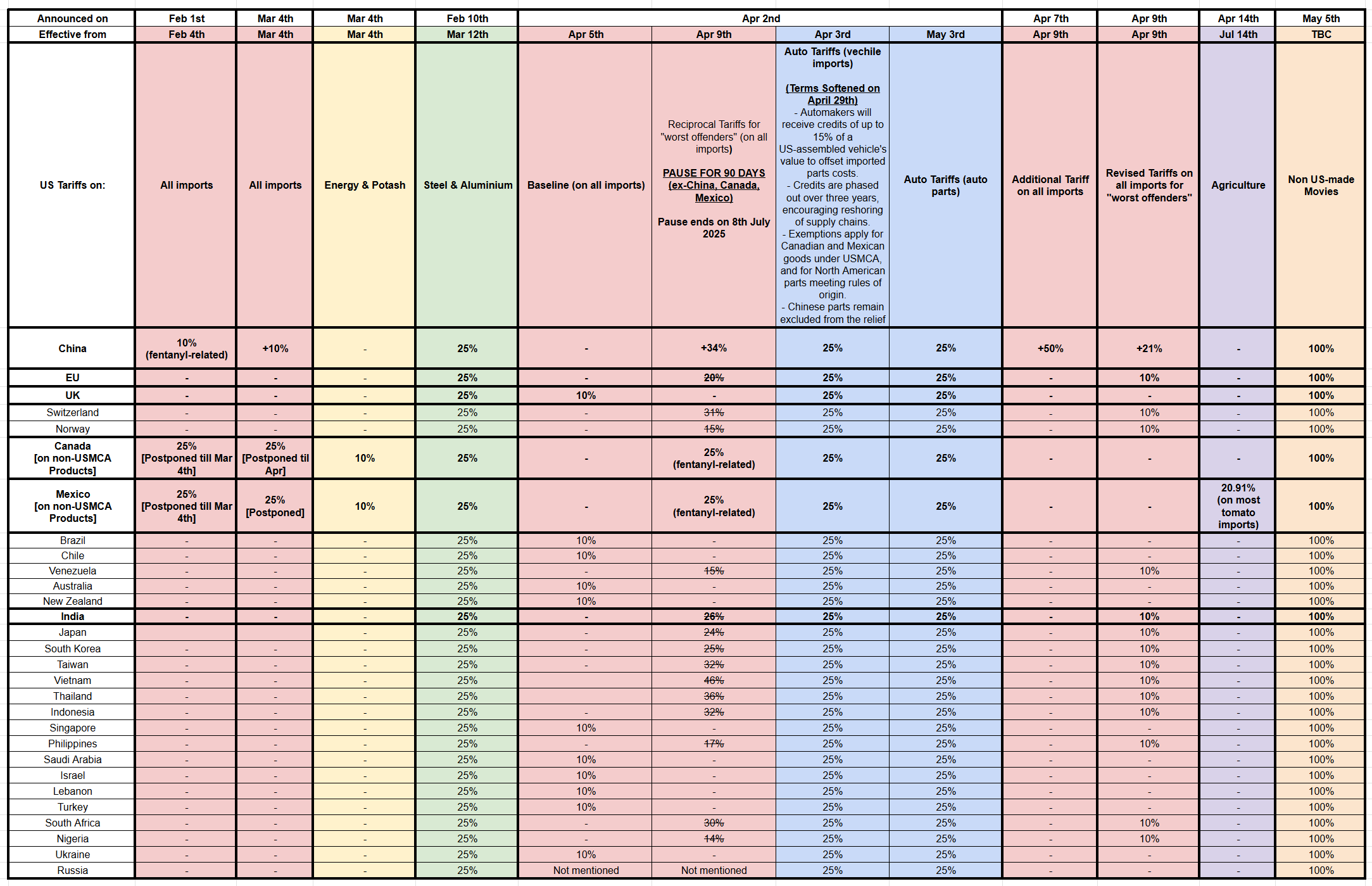
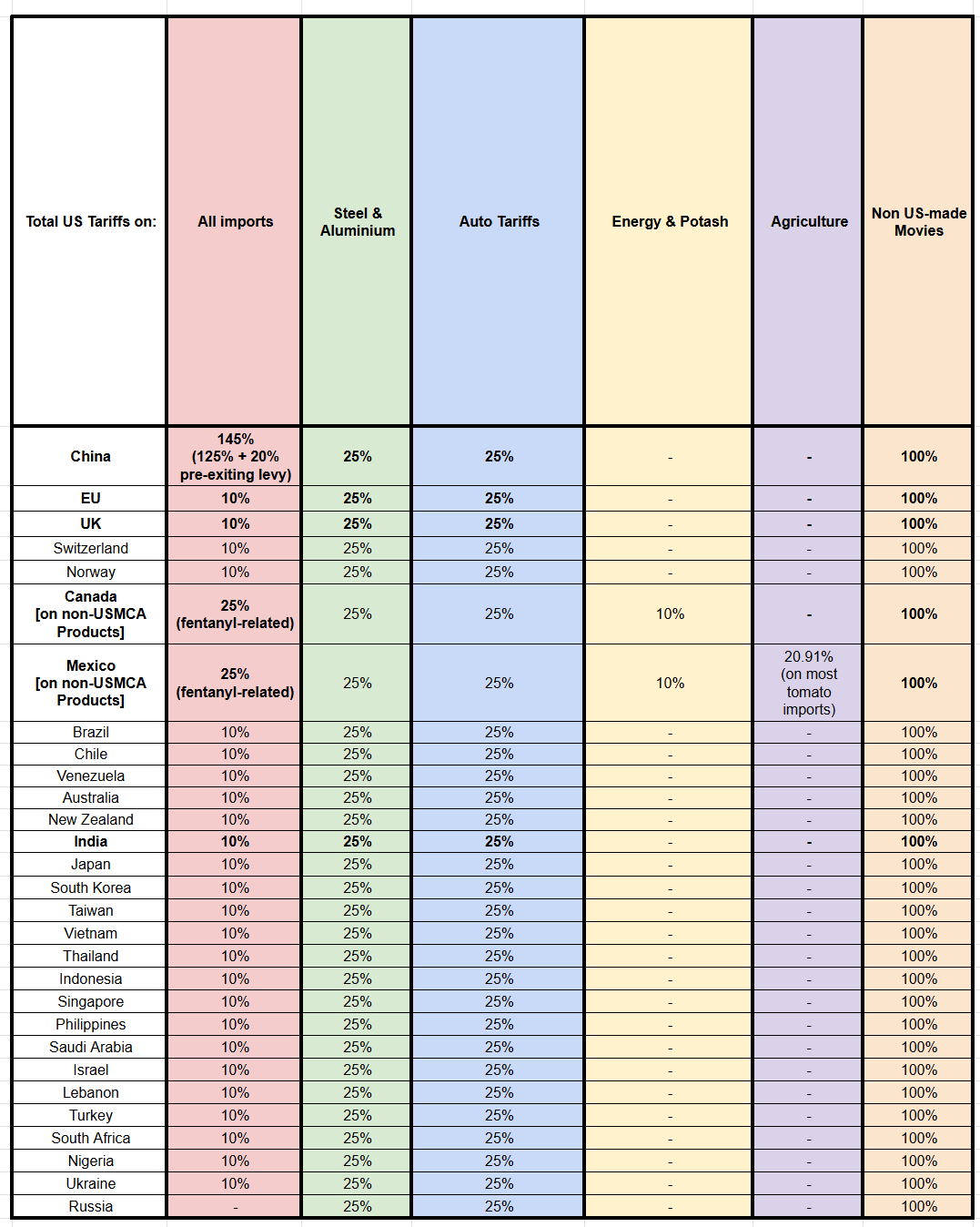
- US President Trump posted that he is "authorizing the Department of Commerce, and the United States Trade Representative, to immediately begin the process of instituting a 100% Tariff on any and all Movies coming into our Country that are produced in Foreign Lands".
- US President Trump’s 25% tariffs on engines, transmissions and other key auto parts took effect on Saturday.
- Fox Business’s Gasparino posted on X that he is getting guidance from Wall Street sources close to the White House that a bunch of trade deal “frameworks” can be expected in the coming weeks, while they might trickle out sooner such as deals with India, South Korea or Japan and it is always possible they could be as early as this week as people have been forecasting. However, he was told that delays involved the time-consuming nature of getting various foreign sign-offs on all the details in the agreements.
CHINA
- US President Trump answered no but stated that China and his people are talking about different things when asked if he plans to speak with Chinese President Xi this week, while he replied could well be when asked if any trade deals are coming this week. Furthermore, Trump said he wants a fair trade deal with China and they are meeting with many countries, including China, on trade deals.
- US President Trump said he is willing to lower tariffs on China at some point because the levies now are so high that the world's two largest economies have essentially stopped doing business with each other, although he also noted that he would need to keep at least some tariffs on foreign goods in place to convince businesses to move production to the US, according to Bloomberg and Axios citing an interview with NBC News.
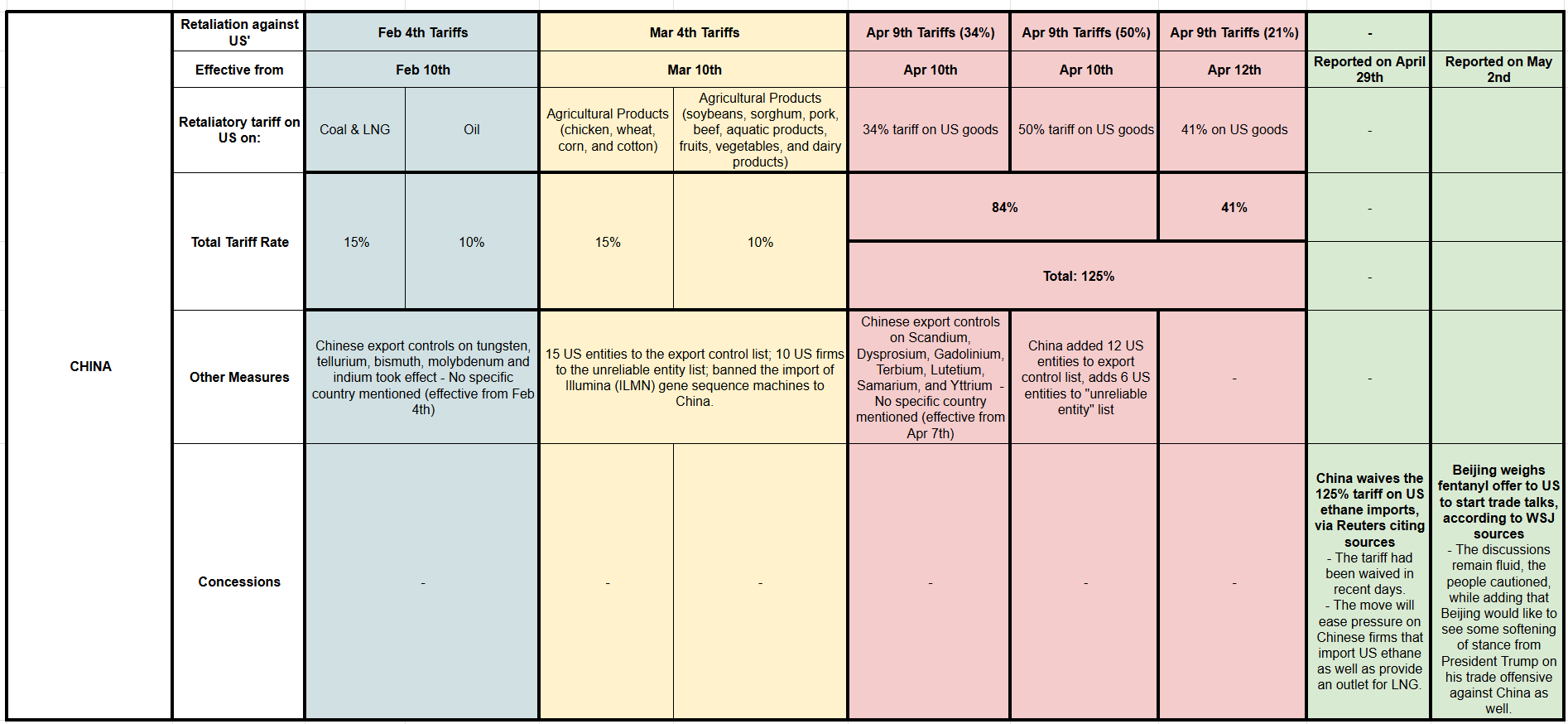
- It was reported on Friday that Beijing weighs fentanyl offer to US to start trade talks, according to WSJ sources. Beijing is considering ways to address the Trump administration’s gripes over China’s role in the fentanyl trade, potentially offering an off-ramp from hostilities to allow for trade talks to start. Part of Beijing’s thinking involves dispatching Wang, who is the minister of public security and a senior leader within the State Council, China’s cabinet, to the US to meet with senior Trump officials, the people said, or have him meet with US officials in a third country. The discussions remain fluid, the people cautioned, while adding that Beijing would like to see some softening of stance from President Trump on his trade offensive against China as well.
- China President Xi’s public-security czar, Wang Xiaohong, has been inquiring about what Trump team wants China to do re: fentanyl precursors, according to WSJ's Lingling Wei.
- Chinese exporters are reportedly increasing efforts to avoid US tariffs by shipping their goods via third countries to conceal where they originated from, according to FT.
MEXICO
- US President Trump is pressuring Mexico to allow deeper US military involvement in the fight against drug cartels, according to WSJ citing sources; making security a sticking point for neighbours that are also negotiating over trade and immigration. Tense call between presidents shows how discussion of US military action has strained relations.
- Mexican President Sheinbaum said she rejected an offer from US President Trump to send US troops to Mexico to help combat drug trafficking.
JAPAN
- Japanese Finance Minister Kato said on Sunday that Japan has no intention of using the possibility of selling its US Treasury holdings for advantage in trade negotiations with the US, according to Nikkei.
UK
- US President Trump’s trade adviser Navarro warned the UK against deepening trade ties with China, potentially complicating tariff talks between the UK and the US, according to Bloomberg which cited comments by Navarro to The Telegraph.
EU
- EU is reportedly eyeing closer ties to the trans-Pacific CPTPP bloc to defend the rules-based global system, according to FT.
TARIFF BREAKDOWN [UPDATED]
TARIFF TIMELINE
- February 1st - Trump signed an executive order to impose 10% tariffs on all imports from China and 25% on imports from Mexico and Canada starting Feb 4th.
- February 3rd - Trump agreed to a 30-day pause on tariffs against Canada and Mexico.
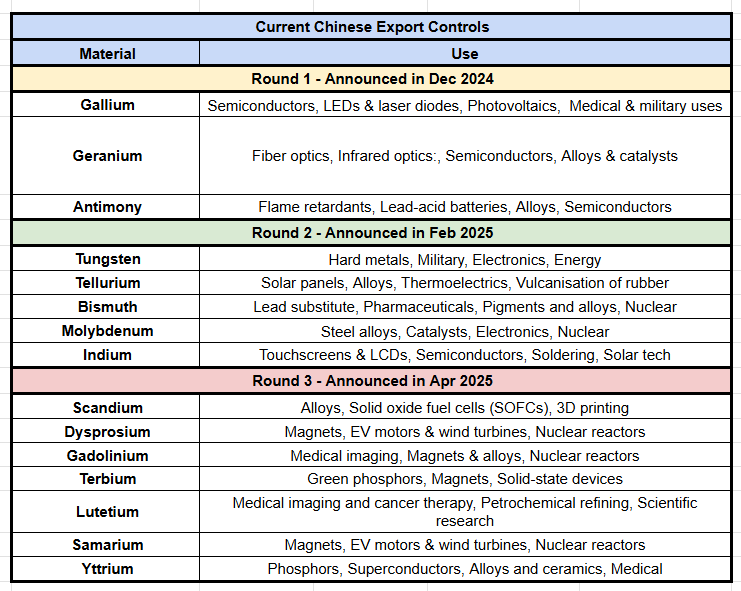
- February 4th - US additional 10% tariff on China on top of existing levies came into effect. Chinese export controls on tungsten, tellurium, bismuth, molybdenum and indium took effect (no specific countries mentioned).
- February 10th - Chinese tariffs against the US took effect (15% tariffs on US coal & LNG, 10% tariffs on US oil).
- February 13th - Trump signed his plan for reciprocal tariffs, albeit delayed the implementation.
- March 4th - Tariff pause on Mexico and Canada expired; Additional 10% tariffs on China went into effect on top of Feb 4th tariffs. Canada announced retaliatory tariffs over 21 days, Mexico said it will also respond with retaliatory tariffs.
- March 5th - Trump allowed a one-month exemption on Mexico and Canada tariffs of US automakers following talks with Ford (F), General Motors (GM) and Stellantis (STLAM IM/STLAP FP)
- March 6th - Trump postponed the initial 25% tariffs on several imports from Mexico and some imports from Canada for a month. In response, Canada suspended its second wave of retaliatory tariffs.
- March 10th - China's retaliatory tariffs on certain US agricultural imports (15% on US chicken, wheat, corn, and cotton; 10% on US soybeans, sorghum, pork, beef, aquatic products, fruits, vegetables, and dairy products) went into effect; announced on March 4th in response to the extra 10% US tariff on top of Feb 4th tariffs.
- March 11th - Trump threatened 50% tariffs on Canada, although he later backed down from this threat after Ontario's Premier announced they are suspending the 25% surcharge on exports of electricity. Trump separately suggested tariffs may go higher than 25% but did not specify which tariffs.
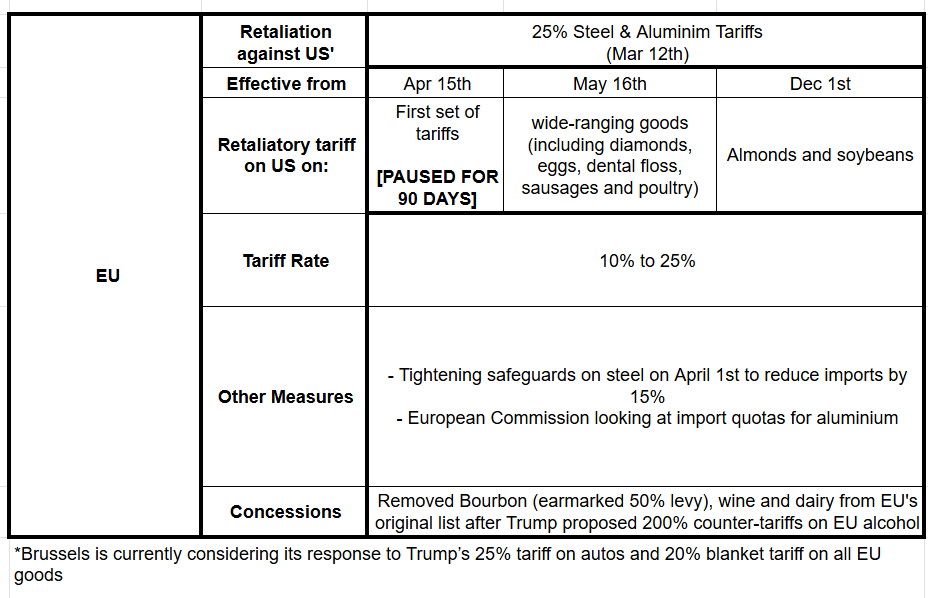
- March 12th - 25% tariff on steel and aluminium imports came into effect, with "no exceptions or exemptions"; European Commission launched countermeasures on US imports while it is putting forward a package of new countermeasures.
- April 1st - Completion of the US trade policy review.
- April 2nd - US Liberation Day; Baseline Tariff on 10% announces + retaliatory tariffs for worst offenders.
- April 4th - China announced 34% reciprocal tariffs against US' "Liberation Day" levies; China announced further export controls on rare metals.
- April 5th - Deadline for US-China TikTok deal; European Commission expected to finalised its proposed response to the US.
- April 7th - EU Commission proposed 25% tariff on US goods to take effect from May 16th and some on Dec 1st.
- April 7th - US President Trump threatened an additional 50% levy on China on top of the post-"Liberation Day" 54% tariff.
- April 9th - EU members vote on countermeasures to US steel and aluminium tariffs; reciprocal tariffs came into effect alongside 104% tariff on China.
- April 10th - China's 84% levy on US goods came into effect
- April 10th - EU suspended retaliation to US steel and aluminium tariffs for 90 days.
- April 11th - China raised 84% levy against the US to 125%.
- April 11th - US exemption announced for semiconductors.
- April 12/13th - White House clarifies chip tariffs are decoupled from reciprocal tariffs; Trump warned no country would be getting "off the hook".
- April 24th - US-South Korea trade talks at 08:00EDT/13:00BST.
- April 30th - Japanese Economic Minister Akazawa plans to visit the US for tariff talks.
- May 1st - UK deadline for consultation on potential retaliatory tariffs.
- May 2nd - De Minimis trade loophole ends.
- May 19th - EU-UK summit in London.
- May - Potential US semiconductor tariffs.
- May/June - Potential US pharmaceutical tariffs.
- July 8th - 90-day tariff lowering for "worst offenders" expires.
- July 14th - US tariffs on Mexican agriculture goes into effect